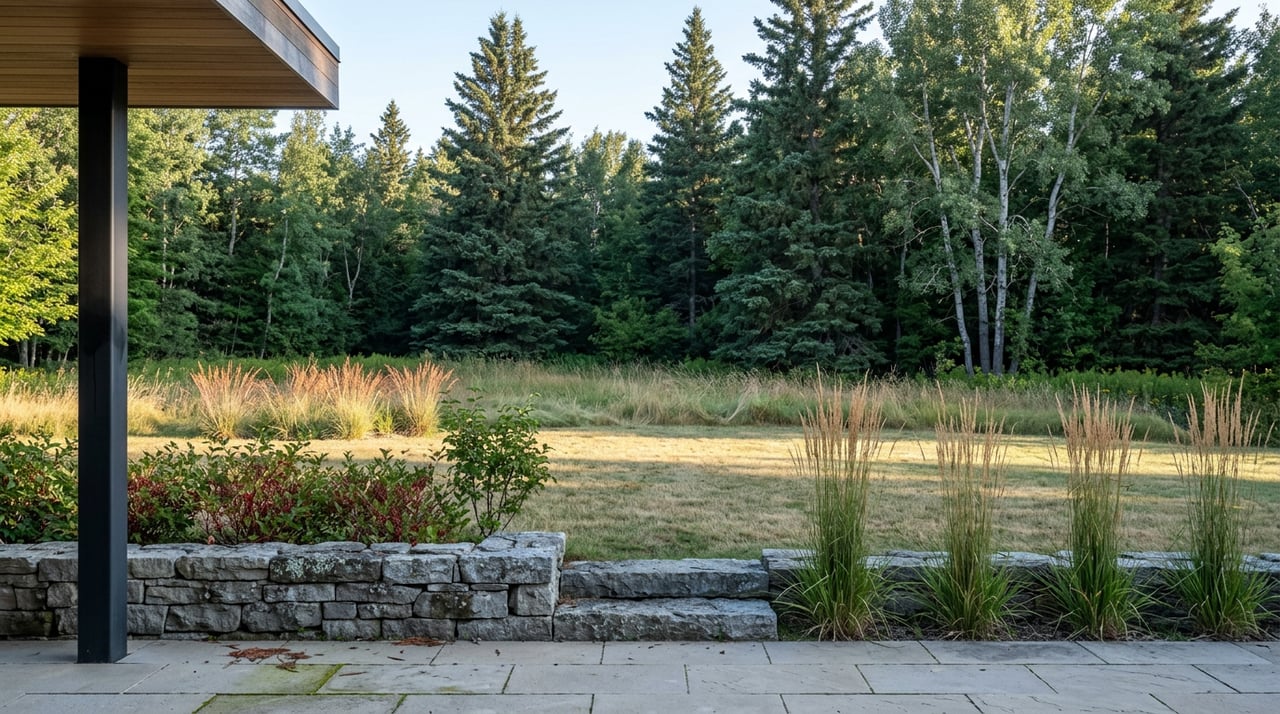
Griffith Woods looks like it runs on nothing. Ninety-three hectares of white spruce and balsam poplar sit along an oxbow-cut stretch of the Elbow River, moose and deer moving through undergrowth so thick in places that nothing grows on the forest floor beneath it. Walk the loop out of the Discovery Ridge Link parking lot on a July morning and the city disappears within a few hundred meters. It feels permanent, protected, self-sustaining.
The rink where kids learn to skate, the courts where retirees play pickleball on a Tuesday morning, the Sunday farm stand in the Rec Facility parking lot: these rely on community fundraising and volunteers rather than a municipal recreation budget. They are supported by a casino held roughly every eighteen months, a volunteer ice crew working through warm winters, and a community association that has spent more than two decades advocating for a path. If you live in Discovery Ridge, you already sense this. What's less obvious is how much of the neighborhood's daily texture depends on those volunteer efforts.
What the Casino Pays For
Ask a Rec Facility regular where the ice budget comes from and the answer isn't a line item in a city ledger. It's a casino. The Discovery Ridge Community Association held its casino fundraiser on July 30 and 31, 2026, an event that comes around roughly every eighteen months and typically generates more than $75,000. That money doesn't go to programming or salaries. It funds the build, repairs, and improvements to the Rec Facility itself, the same building that supports tennis, pickleball, roller hockey, skating, and hockey for the whole community.
This past season tested that model. The ice crew, a group of volunteers who maintain the outdoor rinks through the winter, ran into a stretch of warm weather and water restrictions that made keeping ice on the ground genuinely difficult. Skating still happened, with volunteers maintaining the ice through those conditions. Tennis courts were also due for improvements this year, and the association applied for a grant to put solar panels on the recreation maintenance building's roof. That application didn't come through this round.
The casino remains an important source of funding for Rec Facility improvements.
Summer's Unofficial Calendar
The events that mark a Discovery Ridge summer aren't civic holidays. They're association-run, and their survival depends entirely on someone stepping up to lead them.
| Event | Timing | What Keeps It Running |
|---|---|---|
| Parade of Garage Sales | Early June (June 6, 2026) | Drew shoppers from across Calgary into the neighborhood in a single coordinated day |
| Farm Stand by Shirley's Greenhouse | Sundays, 10 a.m. to 2 p.m., through summer | Set up in the Rec Facility parking lot, weather dependent |
| Stampede Round Up | Late spring/early summer | Backed by the City's Ward Community Event Fund, featuring a live set from local band Dangerous Goods this year |
| Music in the Park | Cancelled for 2026 | No volunteer stepped forward to lead it |
Music in the Park isn't gone because of budget cuts or a scheduling conflict. No volunteer signed up to run it, and the association has said plainly that if it's going to come back in 2027, someone needs to confirm as project lead by January 15 of that year.
Highway 8 Pathway Access
Drive or walk toward Westhills along Highway 8 and you'll notice the gap before you can name it. The request for a multi-use trail connecting Westhills Way to 69th Street, on the south side of Highway 8, isn't new. It traces back to plans for the long-planned Clearwater Enmax Legacy Park. In 2021, the Calgary Herald reported that the vision for that signature park had been scaled back to little more than a storm pond. The community association raised concerns at the time.
That history matters now because the same pathway gap is back on the table for a different reason. The eastbound Highway 8 bridge over the Elbow River is being rebuilt, and current plans call for demolishing the old structure without adding a pathway to its replacement. The community association has continued to advocate for pathway access with the relevant stakeholders as that work proceeds. The gap means a walk or ride toward Westhills still involves routing around the highway corridor rather than using a dedicated path.
Wetland Restoration and Trail Plans
East of Discovery Ridge, along the corridor cleared for the Southwest Calgary Ring Road, the wetlands raise a separate question about restoration. Construction required removing natural and constructed wetlands in the road's transportation utility corridor, and the project's own environmental framework calls for "no net loss" of wetland function, with replacement wetlands created elsewhere through Ducks Unlimited Canada as compensation.
Following the wetlands' removal during ring road construction, the DRCA has met with the Taza developer and City of Calgary representatives to discuss restoration and possible improvements to the conservation area. Future trail connections between 69th Street and the Taza communities are being contemplated in development plans, though timelines and specifics aren't yet confirmed.
Just south of the area, Griffith Woods remains largely untouched and is home to orchids, moose, and a mature spruce stand that's one of only two of its kind left in the city's park system.
The Part That Doesn't Show Up in a Listing
None of this appears on a real estate stats page or a walk score: a casino fundraiser held roughly every eighteen months, an ice crew maintaining the outdoor rinks through a challenging winter, a farm stand supplied by one greenhouse every Sunday, and a community association that has spent more than two decades advocating for pathway access and wetland restoration.
At Dexter and Co, this is the kind of detail we pay attention to, not because it changes what a home is worth today, but because it shapes what living here actually feels like over years, not just the season you move in. If you're curious how threads like the Highway 8 pathway file or the Taza wetlands conversation might eventually shift the ground under a Discovery Ridge address, reach out. It's exactly the kind of local read we like to give straight.