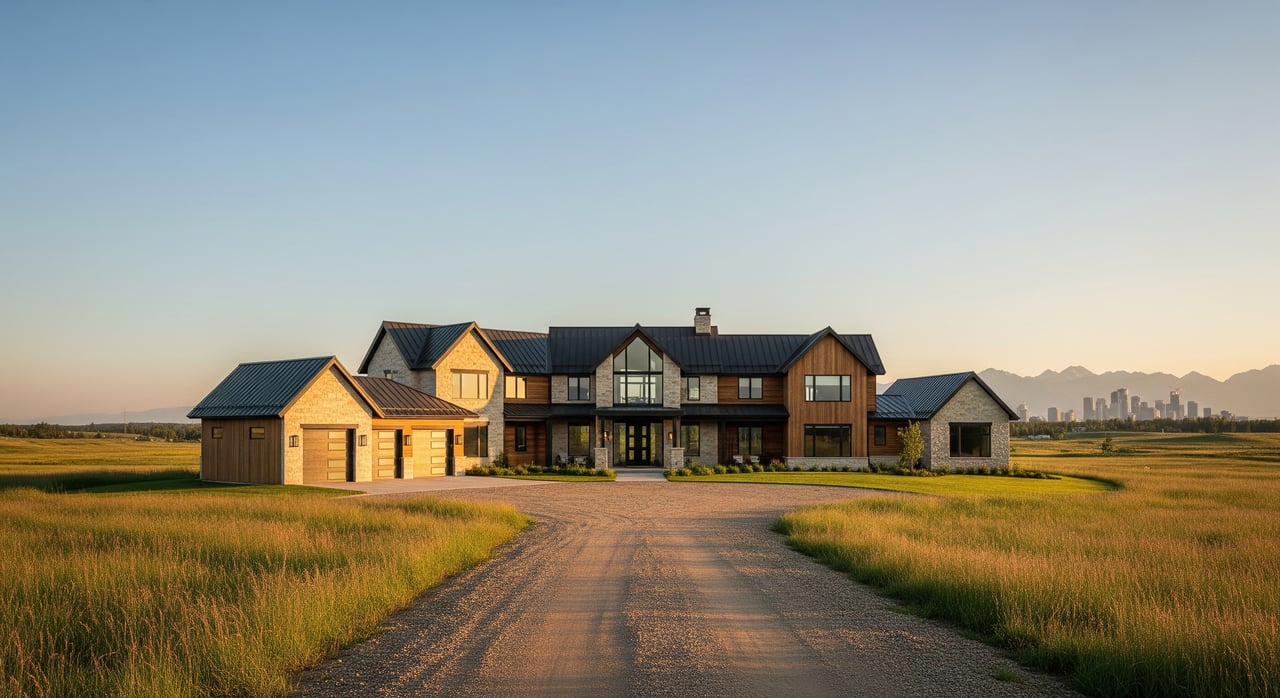
Are you picturing quiet starry nights, room for a workshop and horses, and kids tearing across a big backyard? Or do you crave walkable coffee runs, quick commutes, and a short ride to arts, sports and dining? If you are torn between a Springbank acreage and an inner-city Calgary address, you are not alone. In this guide, you will learn the real tradeoffs in lifestyle, commute, services, maintenance, risk and resale so you can decide with clarity. Let’s dive in.
Springbank vs Springbank Hill
Springbank refers to the semi-rural area just west of Calgary in Rocky View County. It is outside Calgary’s municipal limits and follows Rocky View County bylaws and services. Springbank Hill is a Calgary neighbourhood within city limits and follows City of Calgary rules and services. Make sure you confirm which one you mean when you start your search.
Lifestyle, space and privacy
Springbank acreages give you space to breathe. Large lots create privacy and allow for play areas, gardens, RV parking, and purpose-built spaces like shops, outbuildings or paddocks. Nights tend to be quieter with lower density and darker skies in many pockets. If you want room for projects and outdoor living, acreage life delivers.
Inner-city Calgary trades land for convenience. You get easier walkability to amenities, quicker access to schools, community programming, libraries and sports facilities, plus a wider mix of restaurants and cultural venues. The choice is a real lifestyle fork: more space and privacy versus more convenience and social infrastructure. There is no right answer, only what fits how you live.
Commute and transport
In Springbank, you will rely on your car. There is no CTrain service, and public transit is limited or non-existent across many pockets. Your commute will depend on the specific sub-area, your destination and traffic patterns. Typical routes include Highway 1, Highway 8 and west-southwest arterials into the city.
Inner-city homes often shorten drive times and open up transit and active transport options. Many neighbourhoods have direct bus and CTrain access and more predictable commutes. Before you decide, time your commute during peak hours from a short list of properties and confirm parking needs at your workplace. If you have hybrid work flexibility, note how that changes your tolerance for distance.
Services and utilities you will rely on
Understanding how a property is serviced is essential, especially on acreages where municipal systems may not apply.
Water and sewer
- Springbank: Many properties use private wells and septic systems or participate in rural co-ops. Some newer subdivisions have piped services. Always verify for the specific parcel.
- Calgary: Municipal water and sewer are standard.
- Practical tip: Ask for well water test results, septic system details, and maintenance records. Budget for routine testing and septic pumping over time.
Power and gas
- Utility providers vary by address. In Springbank, distribution can involve FortisAlberta for power and ATCO for gas, while ENMAX is common within Calgary. Response times and outage frequency can differ between rural and urban service areas. Confirm providers per property and ask about typical reliability.
Waste collection
- Springbank: Service is often via private contractors or Rocky View County schedules. Some properties require self-haul to transfer sites.
- Calgary: Curbside municipal collection for garbage, recycling and organics is standard.
Internet and phone
- Springbank: Options range from fibre or DSL in select pockets to fixed wireless or satellite solutions like Starlink. Speeds and latency vary by micro-location and topography. If you rely on video calls, streaming or online schooling, run an on-site speed test and ask neighbours about real-world performance.
- Calgary: Fibre and high-bandwidth options are widely available across most inner-city areas.
Emergency services
- Springbank: Rural fire services and volunteer brigades may serve your area, and distances to responders can be longer than in the city. Ambulance and medical response times vary by location.
- Calgary: You benefit from faster municipal emergency response and proximity to hospitals and urgent care sites.
Quick buyer checklist for services
- Confirm water source and secure recent well test results.
- Review septic system type, permits and maintenance records.
- Identify electricity and gas providers and typical reliability.
- Run on-site internet speed tests and confirm available ISPs.
- Map fire hall coverage and typical emergency response expectations.
Maintenance, operating rhythm and costs
Acreage life rewards hands-on owners or those with strong contractor networks. Expect seasonal to-do lists that include driveway snow clearing, road or driveway grading, pasture and fence maintenance, tree care and weed control. Wells need periodic testing. Septic systems typically require pumping every few years depending on size and use.
Inner-city homes usually carry lower outdoor maintenance loads. Smaller yards mean fewer hours of mowing and pruning, and municipal snow removal and road work reduce owner responsibilities. Condo ownership can shift most exterior tasks to condo or HOA fees, which changes the workload but not the need for budgeting.
For acreages, plan for both ongoing and capital line items. Over a multi-year horizon, big-ticket items can include outbuilding roofs, driveway resurfacing, septic replacement and well pump repairs. If you are time-poor, add an allowance for contractor management so you are not stressed when the snow flies or a gate fails.
Rules, permits and land-use
In Springbank, Rocky View County’s land-use bylaw and the Springbank Area Structure Plan guide what you can build and how you can use your land. That includes set-backs, accessory buildings, suites, agricultural uses and animal keeping. Some projects require a development permit and site servicing plans.
Inside Calgary, the City of Calgary Land Use Bylaw applies, with different permitted uses and often higher density allowances in many neighbourhoods. Before you write an offer, confirm permitted uses, check for unpermitted structures and review any legacy caveats. A quick planning call can prevent surprise costs later.
Insurance, risk and environment
Rural risk profiles differ from urban ones. On acreages, insurance premiums can be higher due to distance to fire protection, wood stoves, outbuildings or features like ponds and riding arenas. Wildfire exposure can be higher on treed lots, which makes FireSmart practices and defensible space important. Parcels near rivers or creeks may sit in mapped flood hazard areas.
Urban homes have a different set of risks. While municipal fire response is typically faster, some older communities face basement flooding or infrastructure-related issues. No matter where you buy, obtain multiple insurance quotes early, review flood and wildfire risk resources and assess mitigation options before you remove conditions.
Resale and market dynamics
Acreage properties serve a more specialized buyer pool. Marketing timelines can be longer, and value is tied closely to acreage size, functionality, access, fencing, water rights or reliability, and the quality of outbuildings. Proximity to Calgary and the condition of access roads can be major value drivers.
Inner-city homes typically draw a broader audience that includes young professionals, families, downsizers and investors. Turnover can be faster. If you plan to sell an acreage, emphasize usable land features, clear servicing documentation, and recent well and septic reports. Strong preparation shortens days on market and supports price confidence.
Decision framework: is acreage life right for you?
Use this quick self-check to align the choice with how you actually live.
Lifestyle and space
- Do you truly need and use a large yard, workshops, animal facilities or room for extended family?
- How important are privacy and separation from neighbours to your daily comfort?
Commuting and access
- Are daily car commutes acceptable if you time-test the route during peak hours?
- Does anyone in your household need reliable public transit access most days?
Services and utilities
- Does the property rely on a well and septic? Are permits and maintenance records available and up to date?
- What internet speeds are available and do they meet your remote work or streaming needs?
Schools and childcare
- Which school division applies and is busing available? What are typical school commute times from the property?
Maintenance and costs
- Can you handle or budget for driveway clearing, fencing, outbuilding upkeep and well or septic maintenance?
- Do you have contractor contacts, or will you need to build that network?
Safety, insurance and environment
- What is the closest fire protection and how will wildfire or flood risk affect premiums and preparedness?
- Do you have quotes that reflect the property’s unique risk profile?
Regulatory and future-proofing
- Are your intended uses permitted today? Any planned county or city projects that could affect access or enjoyment?
Resale and liquidity
- How does the local demand for acreages compare to your horizon for selling? Do comparable sales support your plan?
Next steps: move forward with confidence
- Verify the location and governance. Confirm whether a parcel is in Rocky View County’s Springbank or inside Calgary’s Springbank Hill so you know which bylaws and services apply.
- Time your commute. Drive the route to work or school during peak hours and map alternatives.
- Confirm servicing. Request well water tests, septic inspections and maintenance records. Review electricity and gas providers and ask about reliability.
- Test internet on site. Run speed tests and talk to neighbours about performance through seasons.
- Gather operating evidence. Ask for recent utility bills and contractor invoices for snow clearing, driveway work, fencing and well or septic service.
- Review planning documents. Confirm permitted uses, accessory buildings and any unpermitted structures before you remove conditions.
- Price insurance early. Get quotes that reflect distance to fire services, outbuildings and environmental exposures.
Work with a local advisor who does both
Choosing between Springbank and the inner city is easier when you can compare real properties side by side. At Dexter and Co, we pair boutique, design-led service with broad market reach to help you weigh space, privacy and project potential against commute and convenience. Our team is active across Rocky View County acreages and elite inner-city Calgary homes, and we maintain discreet access to pocket and off-market opportunities for privacy-minded clients. If you are aiming for clarity and a smooth move, let us open the right doors and guide each step.
When you are ready, connect with Kyle Dexter for a private consult or to request a private valuation. We will align your wish list with the right locations, verify the facts that matter and move at your pace.
FAQs
What does “Springbank” mean in the Calgary area?
- Springbank is the semi-rural area west of Calgary in Rocky View County, which follows county bylaws and services. Springbank Hill is a different neighbourhood inside Calgary city limits.
How long is the commute from Springbank to downtown Calgary?
- It depends on the specific parcel, destination and time of day. Time the drive during peak hours from shortlisted properties and confirm parking needs at your workplace.
Will my Springbank acreage have municipal water and sewer?
- Many acreages rely on private wells and septic systems, though some newer subdivisions have piped services. Always confirm servicing and request maintenance and inspection records.
Is rural internet in Springbank reliable for remote work?
- Reliability varies by micro-location and provider. Run on-site speed tests, confirm available ISPs and ask neighbours about real-world performance through different seasons.
What maintenance should I expect on a 2 to 5 acre property?
- Plan for snow clearing, driveway grading, fence and pasture upkeep, tree care, weed control, well testing and periodic septic pumping. Budget time or contractors accordingly.
How does resale differ between Springbank acreages and inner-city homes?
- Acreages serve a narrower buyer pool and can take longer to sell. Inner-city homes typically draw more buyers and turn over faster, though preparation and strategy matter in both.